

04 Jun From Japanese Tea Ceremony to TikTok: How Matcha Became the World’s Most Talked-About Drink
“Twenty years ago, most people outside Japan had never tasted matcha. Today, cafés around the world struggle to keep it in stock.”
The Green Revolution Nobody Saw Coming
Walk into almost any modern café today and the menu tells a story nobody predicted.
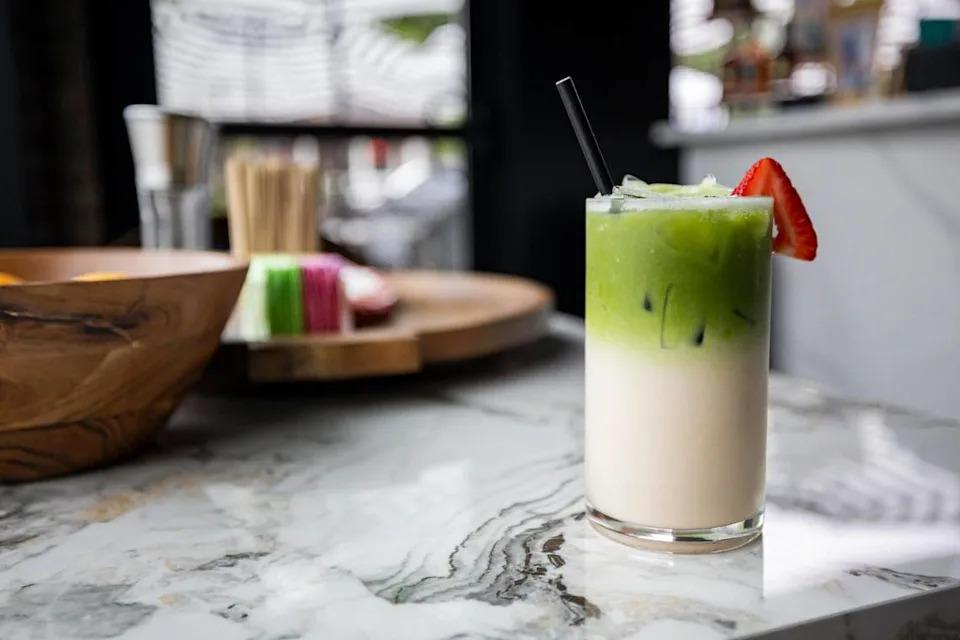
An iced strawberry matcha. A ceremonial-grade matcha latte. A black sesame matcha. A coconut matcha cloud.
Just a few years ago, these drinks didn’t exist outside a handful of cities. Today, their absence from a menu feels like an oversight.
So how did a powdered green tea — once reserved for the hushed rituals of Japanese tea ceremony — become one of the fastest-growing drinks on the planet?
The answer isn’t simply “because it’s healthy.”
It never is.
This is a story about history, culture, design, and a generation quietly rewriting what a café is supposed to be.
It Started More Than 800 Years Ago
Ironically, matcha’s story didn’t begin in Japan.
Tea leaves were first ground into powder in China during the Song Dynasty, nearly a thousand years ago. In the 12th century, a Japanese Buddhist monk named Eisai carried tea seeds and preparation methods home after studying Zen in China — and what followed was one of history’s most patient transformations.
Over centuries, Japan didn’t simply adopt the practice. It refined it into something altogether different.
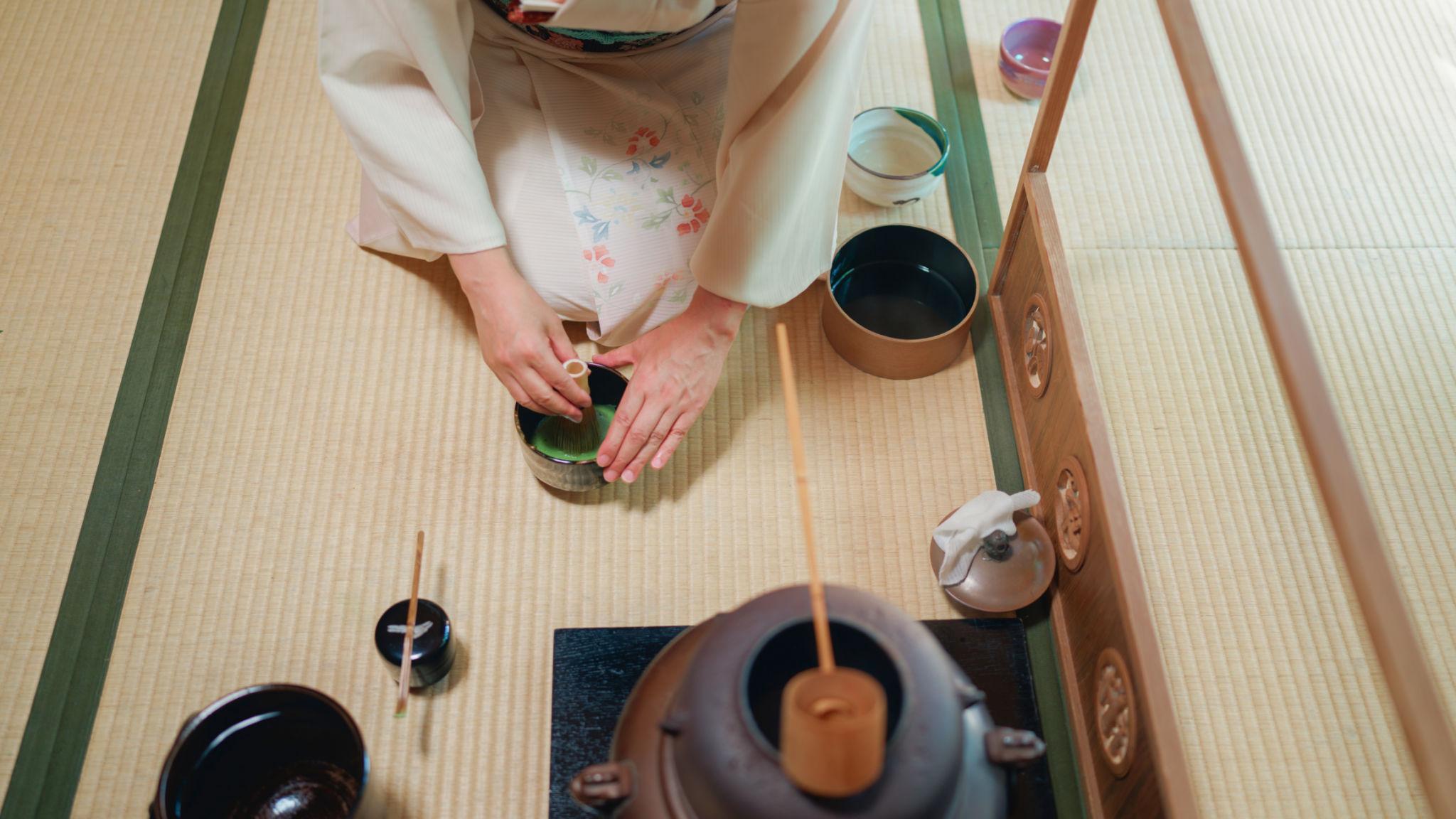
What emerged was Chanoyu — the Japanese Tea Ceremony — a discipline in which preparing matcha was not a task but a philosophy. Harmony. Respect. Purity. Tranquillity. Every movement carried intention. Every bowl held meaning. Every sip demanded presence.
For centuries, matcha remained inseparable from Japanese culture, unhurried and unconcerned with the world beyond.
Then the world came looking for it.
The First Wave: Health Food
Outside Japan, matcha spent decades as a quiet secret.
As Western consumers began turning toward antioxidants, superfoods and cleaner living in the early 2000s, matcha started appearing tentatively on health food shelves — promoted for its naturally occurring antioxidants, its vivid chlorophyll, and its rare combination of caffeine and L-theanine, which many described as producing a smoother, more sustained alertness than coffee.
But matcha remained niche. Few knew how to prepare it. Fewer cafés served it. Its flavour — earthy, grassy, complex — was considered too unfamiliar for mainstream audiences.
It was a drink waiting for its moment.
The moment was coming.
The Second Wave: The Café Revolution
Everything shifted when cafés stopped treating matcha as tea.
They treated it like coffee instead.
Milk. Ice. Syrups. Cream tops. Fruit. Oat milk. Seasonal variations. Suddenly matcha became not just approachable but desirable — a drink that people who had never touched traditional tea found themselves craving on a Tuesday morning.
It hadn’t replaced Japanese tradition. It had done something far more interesting: it created an entirely new category. A language of drinks that borrowed matcha’s soul while speaking in the idiom of the modern café.
The crossing-over had begun.
Then Came TikTok
No platform has ever shaped a beverage quite the way TikTok shaped matcha.
Unlike coffee — mostly warm shades of brown and amber — matcha is unmistakably, defiantly green. It photographs like nothing else. It films like a painting in motion. Watching milk cascade slowly into vivid green tea became one of the internet’s most quietly hypnotic moments, replayed millions of times by people who couldn’t quite explain why they kept watching.
What followed was a cascade of its own.
Morning routines. Study-with-me videos. Pilates mornings. Aesthetic cafés. Healthy habit journals. The drink became content. The content became culture. The culture became demand — real, urgent, global demand that producers in Japan are still scrambling to keep pace with.
The drink had become a world.
Why Gen Z Fell in Love
Every generation finds its drink — and in finding it, finds a piece of itself.
For Millennials, it was specialty coffee: craft, precision, provenance.
For Gen Z, matcha represents something quieter and perhaps more searching. It aligns with a generation-wide movement toward wellness, creativity and intentional living. Young customers are not simply buying caffeine. They are buying a feeling.
Calm. Balance. Creativity. The sense that slowing down is not falling behind.
Many also appreciate matcha as an alternative to coffee that still belongs fully in café culture — its preparation feels ceremonial, its appearance feels honest, its story feels earned. And yes, it looks extraordinary on a phone screen.
The café, for this generation, has never been only about the drink. It is a mirror. And matcha reflects back exactly what they are reaching toward.
Australia: The New Matcha Playground
Australia has long held one of the world’s most sophisticated coffee cultures — which makes matcha’s extraordinary success there all the more telling.
Sydney and Melbourne cafés were among the first outside Japan to elevate matcha from novelty to specialty, building menus that treated it with the same seriousness once reserved exclusively for espresso.
Strawberry matcha. Coconut matcha. Mango matcha. Dirty matcha. Cream-top matcha. Matcha soft serve. Some cafés now report matcha outselling traditional coffee among younger customers entirely — a quiet revolution happening one vivid green cup at a time. Even McDonald’s Australia introduced a nationwide matcha range after demand made ignoring it impossible.
When the golden arches go green, something cultural has genuinely shifted.
New Zealand Is Catching Up
New Zealand has always punched far above its weight in café culture. Now matcha is becoming part of that proud story.
Just a few years ago, authentic matcha cafés were rare enough to feel like discoveries. Today, cafés across Auckland and Wellington increasingly offer ceremonial-grade powders, oat milk pairings and seasonal signature creations that change with the months.
The shift reflects something deeper than menu evolution. People no longer visit cafés only for coffee. They visit for experiences — for beauty, for somewhere unhurried to think, for a drink that carries a little more meaning than the ordinary.
New Zealand’s matcha story is still early. That is precisely what makes it exciting.
A Global Challenge: Too Much Love
Success, as it often does, has created a beautiful problem.
High-quality matcha is extraordinarily labour-intensive to produce. Tea plants are shade-grown for weeks before harvest, intensifying their chlorophyll and amino acid content. Leaves are hand-selected, stems and veins painstakingly removed. What remains is stone-ground — slowly, deliberately — into a powder of almost impossible fineness.
This process cannot be rushed. It cannot simply be scaled.
As global demand surged, producers across Japan reported shortages and prices rose sharply — the quiet irony of one of the world’s oldest drinks suddenly struggling to keep pace with the speed of the modern world.
Ancient rituals and viral trends make awkward companions.
What Happens Next?
Will matcha fade?
Some trends do — built entirely on novelty, they collapse the moment novelty moves on.
Matcha is different. Beneath the aesthetics lies something more durable: a convergence of long-term shifts that were already in motion long before the first matcha video went viral. Health-conscious living. Premium café experiences. Japanese culture’s enduring global influence. Plant-based everything. Functional beverages. Visual storytelling. The search for calm in an overstimulated world.
The flavours will evolve — sparkling matcha, protein matcha, botanical infusions, unexpected seasonal pairings. But the appetite for drinks that carry both story and experience is not going anywhere.
People have tasted something that makes them feel good, look good and belong to something worth belonging to.
That is a very difficult thing to walk away from.
Why This Matters to 9th Sip
At 9th Sip, we have never seen matcha as a trend to chase.
We see it as the beginning of a new chapter — one that café culture has been quietly building toward for years.
Coffee built the modern café. Matcha is helping reimagine it.
It invites creativity where routine once dominated. It encourages experimentation where familiarity felt safe. It opens conversations between generations, between cultures, between what cafés used to be and what they are becoming.
And perhaps most importantly, it reminds us of something cafés have always known, even when the world forgot:
A great drink is never only a drink.
It is an invitation to pause. To connect. To be somewhere worth being.
That is the future we are building at 9th Sip — deliberately, beautifully, one sip at a time.
9th SIP TEAM